Parenting and Supporting Grieving Children While Grieving Yourself
Guest Post by: By: Jessica Correnti, MS, CCLS
Grieving is exhausting. It is a full mind/body experience that can leave you feeling totally
depleted. Now, add caring for young children on top of this heavy grief mix. There is this
dichotomy of being so incredibly thankful for them and also so exhausted by the fact that they
still need you [their caregiver] for all the things.
Their meals need to be made. They need someone to help them get ready for the day. They
require the focus, connection, and presence of their caregiver throughout the day. All of this
you know, but it can seem out of reach while grieving. Simple tasks like getting out of bed and
making a meal can seem like the biggest chore while grieving. Grieving while parenting is hard
work. Give yourself grace and space as you navigate this uneasy territory.
Needs of Grieving Children
You may see many changes in your child after the death of a loved one. It can be normal to see
sleep or eating changes, fussiness, clinginess, or regression or changes with behaviors.
Children often know much more than we imagine. They are intuitively absorbing all that is
happening in their environment—the emotions of their caregivers, the subtle changes in
routines, the feel of the room. Children will try to make sense of these changes the best they
can.
Sometimes the way kids try to put the puzzle pieces together equates to some major mix-ups.
If kids are not told what is occurring with simple, concrete language than they can develop
misconceptions and fears. Young children are developmentally egocentric. They may think that
they are the cause for all the grief emotions. They could think that they caused the person to
die based on things they said, did, or thought.
What do kids really need for optimal coping after the death of a loved one? Young children
need information, given in a developmentally appropriate way. They need connection,
validation, and a safe space to process and explore their emotions.
Avoiding Euphemisms and Giving Clear, Concrete Information
We want to provide this clear language by using all the D words. Using terms like death, die,
dying, dead may seem harsh or blunt to many, but these terms will help children understand
and can also proactively prevent unnecessary misconceptions.
For example, when a child overhears a parent saying, “We lost the baby.” that child may think,
“Well let’s go find the baby. Why is everyone so sad?” It is helpful to add to the description that when someone dies, they no longer have a heartbeat, breathe, move, or do the things that we
all do on a daily basis.
If there is a known cause of death, it can be helpful to share that with simple terms. For
example, “The baby’s heart didn’t form the way it was supposed to and their heart stopped.
People need a working heart to live.” Having a description about the why behind the death can
help children make sense of what has happened. It is common for kids to hear the blanket
statement, “They died because they were really sick”. However, I would caution against only
using a phrase like this because it lacks clarity, which can be anxiety producing when a child
gets their next cold or virus.
Providing opportunity for connection

One of the biggest needs for grieving children is connection. Connection with their caregiver
and connection with their person who died. Here are some ideas for both categories.
Connection with a caregiver: Setting up a dedicated space and time for connection could look
like 10 minutes where that is your only intention. Your energy may be low, so here are some
easy low-energy activities to connect: go for a walk, snuggle on the couch, look at pictures
together, play a simple board game, or play I-spy.
Ways to facilitate connection with the person who died: talk about the person who died,
share their pictures, share favorite memories, engage in memorials or rituals, raise money or
engage in a project in honor of them, share what makes you feel connected to or think of the
person who died.
Encourage the Open Expression of Grief —yours and theirs
Children are still learning all the big emotions that can be felt. The names of those emotions,
how they feel in their body, what they can do to manage and move through these big emotions.
We, as adults, are still trying to figure out our emotions at times. Emotions are complicated and
messy, especially while grieving. We can label the emotions that we see our children
experiencing, in addition to labelling our own emotions that our children observe.
Children can learn how to move through difficult life experiences by what is modelled. When
you are having a tough time in your grief–what helps you in that moment? Is it going for a walk,
talking to a friend, support groups, reading, taking deep breaths…Let your children in on how
you cope so they can learn their own coping strategies.
Here is an example of grief playing out in my own home: One early December morning, our
family was decorating our Christmas tree. We were hanging up ornaments and one in particular
caught my eye. This simple ornament brought me a burst of grief emotions. It was an ornament
that depicted our growing family, one that was picked out just mere days before our daughter
died in utero. There I was at the Christmas tree, with tears streaming down my face, while my
young two children looked up at me with wide eyes, wondering what was happening. I said,
“I’m just really sad. I miss Maggie.” No other words were needed. Little arms wrapped around
my neck, along with snotty kisses. I gave them the example of expressing my feelings, shedding
a tear, talking about my grief, and spending a moment feeling the feelings.
These are little moments in time, but very powerful nonetheless.
Play and Therapeutic Activities
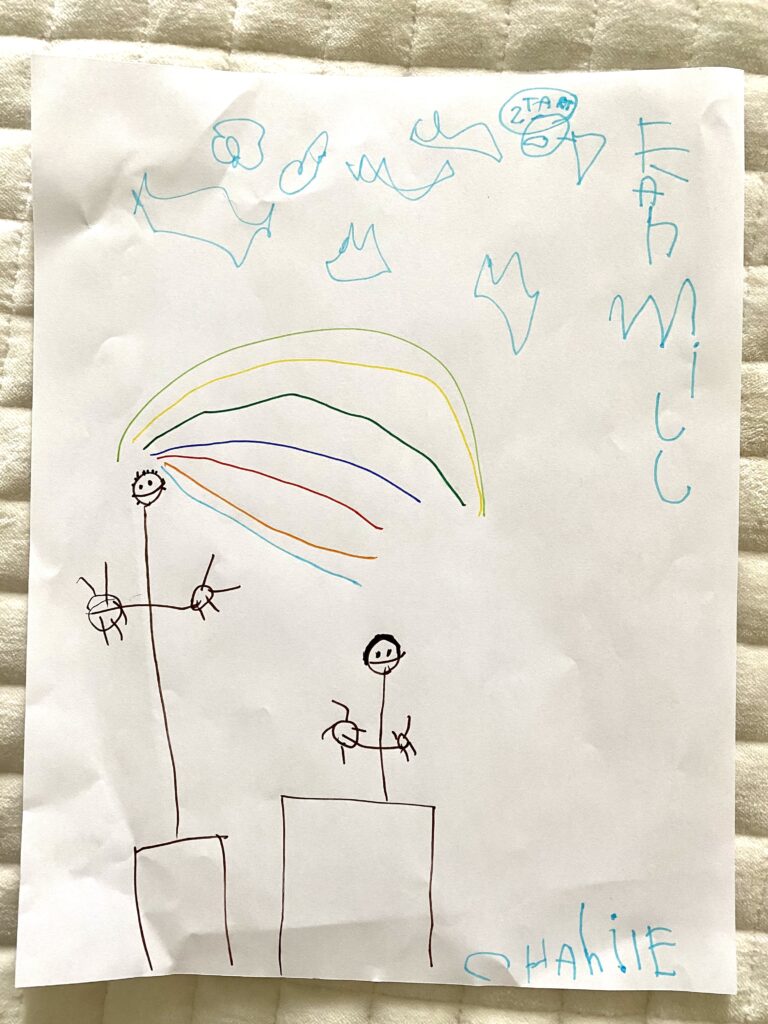
Play is a powerful tool for children. Play is how kids process and make sense of their
experiences and world. After a death has occurred, children may be found playing through
themes of death or themes of what they wish would have happened. Play is their safe space to
explore big emotions and events.
Often children benefit from having a professional guide them through specific goal-oriented
activities to process their grief. Some children, even at a young age, will filter their grief in front
of their caregivers because they do not want to see them sad or in more pain than they already
are experiencing. This is where is can be really helpful to have a third-party help support the
grieving child. A Certified Child Life Specialist, Licensed Clinical Social Worker, Grief Counselor,
or other professional trained in supporting grieving children can help children express and
process their grief through a large range of therapeutic activities.
About the Blog Author: Jessica Correnti
Jessica is a Certified Child Life Specialist with 15 years’ experience in the healthcare setting,
specializing in providing psychosocial and emotional support to children and families facing
stress and anxiety related to illness, hospitalization, and the death of a loved one.
Her work began in a pediatric cardiovascular ICU at All Children’s Hospital in St Petersburg, FL.
She has also worked at Johns Hopkins Children’s Center in the Pediatric ICU and perioperative
unit as well as Greater Baltimore Medical Center.
She obtained a Bachelors in Education of Young Children with a minor in Psychology from UNC
Wilmington and a Masters in Healthcare Administration and Community Health from Towson
University.
Jessica is the Author of Forever Connected, a book for bereaved siblings, which published in
August 2022. Jessica is currently working on three more children’s grief books, with the next
title expected to be published Fall 2023.
Jessica is the Founder and Owner of Kids Grief Support, a private practice that provides
therapeutic supportive services to grieving children and families. Jessica has clients seeing her
from around the globe for virtual sessions as well as in person sessions for individuals near the
Baltimore area. Jessica is currently accepting new clients.
Contact Information: www.kidsgriefsupport.com , contact@kidsgriefsupport.com





PLEASE COMMENT BELOW